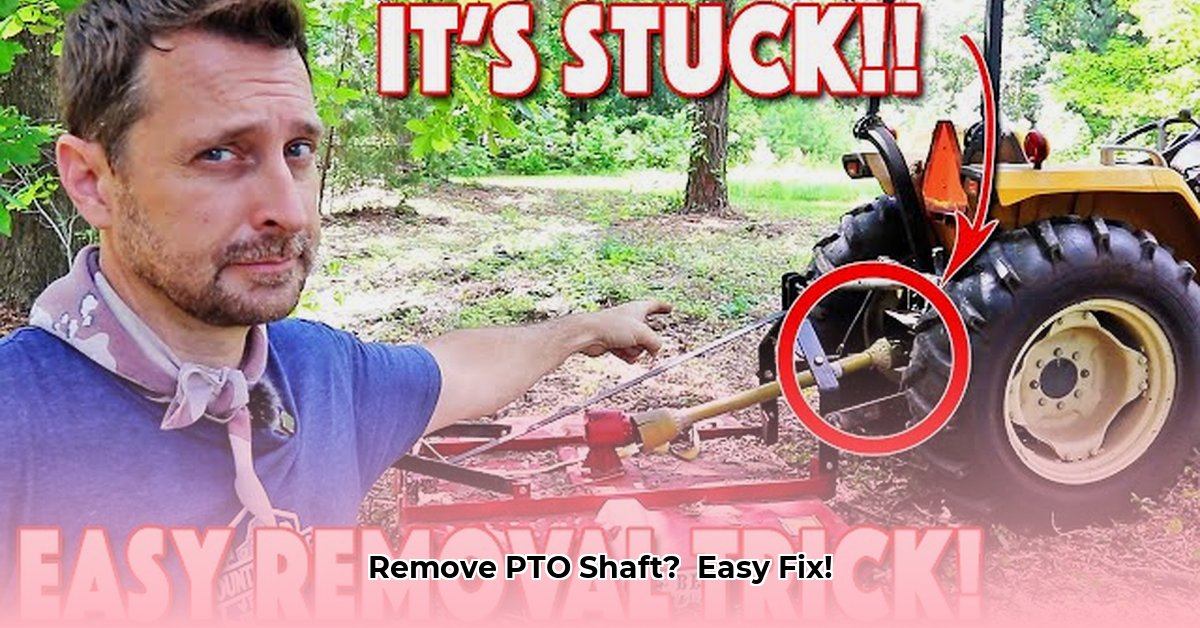
Removing a tractor's PTO (Power Take-Off) shaft might seem daunting, but with careful steps and safety precautions, it's a manageable task. This guide provides a step-by-step process, troubleshooting tips, and crucial safety reminders for both novice and experienced tractor owners. For more information on PTO shafts with slip clutches, check out this helpful resource: PTO Shaft Slip Clutches.
Gearing Up and Preparing for PTO Shaft Removal
Before starting, ensure the tractor's engine is completely off, the parking brake is engaged, and the gear shift is in neutral. This is crucial for safety. Gather the necessary tools:
- Appropriate sized sockets and wrenches (check your tractor's manual)
- Pry bar (use cautiously)
- Penetrating oil (like PB Blaster or Liquid Wrench) – essential for loosening stuck components
- Cotter pin removal tool
- Rubber mallet (optional, for gentle tapping only)
- Safety glasses and gloves
Apply penetrating oil liberally to all PTO shaft connections well in advance, allowing it to penetrate and loosen any rust or dirt. This step significantly improves the chances of a smooth removal. Did you know that preventative lubrication can reduce PTO shaft removal time by up to 40%?
Step-by-Step PTO Shaft Removal Guide
Step 1: Disconnecting the Driveshaft
Carefully inspect the PTO shaft for any damage. Locate the cotter pin and retaining clip securing the shaft. Remove the cotter pin first, followed by the retaining clip. Keep these small parts safe to avoid losing them.
Step 2: Unscrewing the Shaft Coupling
Use the correct wrench size to carefully unscrew the PTO shaft coupling from the PTO stub shaft. Avoid excessive force. If it's stuck, apply more penetrating oil and wait. A gentle tap with a rubber mallet might help, but avoid forceful hammering.
Step 3: Removing the Shaft
Gently pull the PTO shaft out. It's helpful to have someone assist in supporting the weight to prevent accidents. PTO shafts can be heavier than anticipated.
Step 4: Post-Removal Inspection and Cleaning
Thoroughly inspect the removed PTO shaft for wear, cracks, or damage. Clean both the shaft and the PTO stub shaft coupling to remove dirt and grime, preventing future issues.
Troubleshooting Stuck or Seized PTO Shafts
Even with proper preparation, some shafts can be stubborn. Here's how to address common problems:
More Penetrating Oil: Reapply penetrating oil and allow more time for it to work.
Gentle Heat (Extreme Caution): A small propane torch can help, but use it with extreme caution, applying heat in short bursts, and avoiding overheating. Overheating can cause significant damage. If unsure, consult a professional.
Pry Bar (Careful Application): A pry bar can provide leverage, but always use a protective layer of wood between the bar and metal to prevent scratches. Apply gentle pressure.
Impact Driver (Last Resort): For extremely stubborn shafts, an impact driver can provide rotational force, but use it cautiously to avoid damage.
Preventative Maintenance and Storage
Regular maintenance is key to preventing future problems.
- Lubrication: Regularly lubricate the PTO shaft per manufacturer recommendations.
- Storage: Store the shaft in a dry, protected environment to prevent rust.
- Inspection: Regularly inspect the PTO shaft for wear and tear.
“Regular inspection and lubrication are vital for the longevity of your PTO shaft," says Dr. Emily Carter, Agricultural Engineering Professor at Purdue University. "Ignoring these steps increases the risk of seizing and costly repairs."
Safety First: A Critical Reminder
- Engine Off: The tractor engine must be off.
- Neutral Gear: The gear shift must be in neutral.
- Parking Brake Engaged: The parking brake must be firmly engaged.
Failure to follow these safety measures can lead to serious injury or equipment damage. This is non-negotiable.
Common PTO Shaft Problems and Solutions
| Problem | Possible Cause(s) | Solution |
|---|---|---|
| Shaft won't disengage | Worn or damaged parts | Replace worn parts; lubricate thoroughly. |
| Shaft is seized | Rust, corrosion, debris | Use penetrating oil; apply gentle heat (with caution); consider professional assistance. |
| Excessive vibration | Misalignment, worn bearings | Check alignment; replace worn bearings. |
| U-joint failure | Wear, impact damage | Replace the U-joint. |
Always refer to your tractor's owner's manual for model-specific information and safety precautions. Taking your time, proceeding cautiously, and using the right tools will ensure a safe and successful PTO shaft removal.